Child & Youth Diabetes
A Legacy of Support
The Lawson Foundation has a long history of supporting diabetes prevention, management and research. Over the years, we’ve funded a wide range of initiatives aimed at reducing the burden of diabetes, especially in underserved populations, and our commitment to addressing the diabetes epidemic continues to evolve and build on this legacy of support.
In the 1970s, the Foundation endowed the Helen and Frances Lawson Professorship in Diabetes Research for the Lawson Health Research Institute in London, Ontario, to support a senior scientist working to better understand the disease and improve the lives of people living with it. Between 2009 and 2011, a further contribution of $2,500,000 to St. Joseph’s Health Care Foundation grew this endowment into the Helen and Frances Lawson Chair in Diabetes Research, helping to sustain diabetes research in Canada for the long term.
In the 1990s, the Foundation supported two groundbreaking, community-based diabetes prevention projects – the Kahnawake Schools Diabetes Prevention Project (KSDPP) and the Latin American Diabetes Prevention Project. Inspired by the success of these initiatives and in response to growing concern around the challenges of diabetes and the potential of innovative approaches to improve diabetes prevention and management, the Foundation introduced a Canada-wide Diabetes Strategy in 2001-02. Over the next 14 years, the Foundation invested $9,000,000 in a broad range of community-based projects located in urban centres and rural and remote areas, serving diverse populations including children, young adults, pregnant women, Indigenous peoples, ethno-cultural communities, and individuals with severe mental health issues.
The Strategic Evolution of our Approach
2015-2019: Focusing on Children and Youth
In 2015, the Foundation renewed its overall Strategic Direction to focus its impact areas on the healthy development of children and youth; subsequently, in 2016, we launched the Child & Youth Diabetes Strategy (CYDS) to address the challenges faced by children, youth and their families with or at risk for diabetes and its complications. The Strategy’s goals were:
- To improve health outcomes for children and youth with type 1 or type 2 diabetes or who are at risk of developing diabetes and diabetes-related complications through prevention, treatment and improved self-management.
- To optimize the health of women with a history of gestational diabetes in order to help ensure the health of their offspring and families.
- To ensure equitable access to high-quality diabetes prevention, treatment and support programs and services for all children, youth and their families.
The Strategy began with a cohort of community-based initiatives working across a broad range of settings to serve diverse populations, including rural and First Nations communities, inner-city neighbourhoods, schools and clinics, and serving diverse populations. In keeping with our cohort approach, we brought grantees together to share, learn and connect, and every project included evaluation and a plan for sharing what it learned. Additionally, we committed $1,200,000 over six years to the Developmental Origins of Chronic Disease in Children Network (DEVOTION), a cluster of scientists, patients, policymakers and stakeholders whose aim is to address the burden and costs associated with chronic disease in Manitoba.
Through the Child & Youth Diabetes Strategy, initiatives were funded to strengthen the delivery of programs and services by translating knowledge into clinical practice and community programming. Grantees piloted new community-based interventions, expanded existing evidence-based programs, and created tools, resources and training to engage and support children and youth, parents, health professionals, teachers and school staff, community representatives and policy makers. All projects included an evaluation component and a plan for sharing results and learning. In keeping with the Strategy’s cohort approach, grantees were brought together periodically to share, learn and connect with each other and with other influencers in the field.
Projects were based in various settings – rural and First Nations communities, inner-city neighbourhoods, schools and clinics – and ranged in scope from local to regional to national. They served high-risk, vulnerable populations including Indigenous communities, South Asian and other ethno-cultural populations, youth transitioning from pediatric to adult services, and families dealing with issues of poverty and food insecurity. Grantees included two remote Cree communities in northern Quebec and northwest central Manitoba who implemented initiatives to build their capacity to address diabetes in their communities.
2019-2021: Sharpening Our Focus
Over time, our focus sharpened toward supporting communities carrying the heaviest burden of diabetes. In Canada, Indigenous Peoples are especially at risk of diabetes and its complications, a burden shaped by colonization and by longstanding inequities in resources and care. Type 2 diabetes among Indigenous youth is recognized as the fastest-growing pediatric chronic disease in the world, and First Nations people face up to an 80 percent lifetime risk of developing diabetes by the age of twenty.
Given the magnitude of the challenge, the number of actors who have a role to play, and our commitment to working toward reconciliation with Indigenous Peoples in Canada, we convened a group of experts — Indigenous partners, governments and researchers — to help us sharpen our Child & Youth Diabetes Strategy to focus on the prevention of type 2 diabetes and its complications in Indigenous Peoples and communities in northern, rural and remote areas of the country.
Guided by Indigenous ways of knowing and leadership, we began a ten-year commitment, recognizing that it takes time to build the knowledge, relationships, and trust needed to develop and implement community-based initiatives and measure outcomes. The renewed strategy was guided by the key principles of Indigenous leadership; models of Indigenous wellness; community-centred and strength-based approaches; and relationships, reciprocity and shared learning.
2021-2025: Supporting Indigenous-Led Organizations and Communities
In 2022, following our first funding call under the renewed Strategy, we announced $3 million over three years to support ten Indigenous-led projects delivering community-based prevention and health-promotion initiatives, along with activities to inform sound public policy. We centred our efforts on prevention, maternal and perinatal health, and supporting Indigenous-led projects that address health inequities.
In addition to multi-year funding for a cohort of ten projects, the CYDS has provided smaller grants to projects and programs outside the cohort that received multi-year funding. These grants support communities and organizations doing significant wholistic community-based work in diabetes prevention and management.
Together with our initial cohort, these grants have broadened Lawson’s commitments at the intersection of the Child and Youth Diabetes Strategy, the Philanthropic Community’s Declaration of Action (The Declaration), the principles of Reconciliation, and the principles of the United Nations Declaration on the Rights of Indigenous Peoples (UNDRIP).
In 2025, our refreshed strategic direction carried this work forward as the Child & Youth Diabetes impact area, focusing on supporting Indigenous-led organizations and communities doing community-based work in wholistic diabetes prevention and management.
Learn About our Current Focus
Supporting Indigenous-led organizations and communities doing community-based work in wholistic diabetes prevention and management.

Related News and Updates
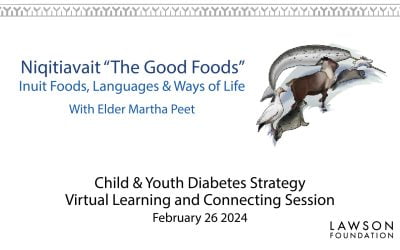
Child & Youth Diabetes | Virtual Visits #5 | Niqitiavait, “the Good Foods”
https://www.youtube.com/watch?v=rJoddhnhzUg In our February 26, 2024, episode of the Child & Youth Diabetes Strategy Virtual Learning and Connecting Series, we were honored to be joined by host Martha Peet, an Inuk Elder and Traditional Knowledge Keeper...

Diabetes Awareness Month
November marks Diabetes Awareness Month and an opportunity to reflect on the silent health crisis affecting millions of people across Canada, especially in northern and Indigenous communities where the rise of type 2 diabetes among youth has been recognized as the...

Child & Youth Diabetes | Virtual Visits #4 | Innovative Approaches to First Nations Wellness
https://youtu.be/4R68_Lk-NWM?si=sL6M4sIXpZ8dGpN2 In Episode 4 of our Child & Youth Diabetes Strategy Virtual Learning and Connecting Series, alongside our partner, First Nations Education Council, we heard from David Gill, a retired National Team athlete...
Child & Youth Diabetes | Virtual Visits #3 | Indigenous Birth Helpers
https://youtu.be/xwVG2vRKwro?si=C7KF4-FY6zyvBNIR “We have to go back to the beginning.” That’s what Indigenous grandmothers told Jolene Mercer and Kathleen Bluesky, who shared the story of Wiiji’idiwag Ikwewag with us for the latest episode of the Child &...
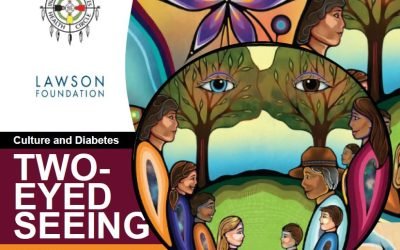
Child & Youth Diabetes | Virtual Visits # 2 | Culture & Diabetes
https://youtu.be/e1uSpCOLoXE?si=ZKi7Dl3n5G1J4WxM “I am not this disease. It came to tell me that I need to start loving myself.” Grandmother Renee Thomas-Hill shares her wisdom in episode 2 of our virtual learning series on diabetes and Indigenous wellbeing....

Child & Youth Diabetes | Virtual Visits # 1 | Food Matters
https://youtu.be/9lQWYl6QBRw?si=L5zAOhEIcXUXDZFI Watch episode 1 of our Child Youth & Diabetes Strategy Virtual Learning & Connecting series, which features a conversation with Demian Lawrenchuk, Fox Lake Cree Nation, and Executive Director of Food...